

eco-friendly practices : ค้นหาหนังสือธรรมะ หน้า 19 / 26
หน้าหนังสือทั้งหมด
6
Call to the Angels: Invitation to Devas
Citation for Call to the Angels
BLESSINGS: Aradhana - Invitation to Devas (www.buddhist-book.com)
“One day Sakka, the king of the Devas approached the Buddha and requested Him to invite the Devas to
This text reflects on a significant event where Sakka, the king of the Devas, requested the Buddha to invite the Devas to witness the recitation of Dhamma. This practice fosters protection for devotee
10
Meeting Luang Por Dattajeevo: A Personal Reflection
When I first met Luang Por1, it was in the summer of 2008. I had come to visit my son, Luang Pi2 Joshua, during his first year as an ordained monk living at Wat Phra Dhammakaya in Bangkok, Thailand. I
In the summer of 2008, I met Luang Por Dattajeevo at Wat Phra Dhammakaya while visiting my son. Initially intimidating, my interactions with this wise monk transformed my understanding of Dhamma. As t
16
Understanding Boon and Generosity in Buddhism
be a sleeper!” He looks at me and almost winks. “We need to make boon continuously because, although we are born with boon, we don’t know how much we have when we are born. So we must continually make
In this enlightening dialogue, the necessity of creating 'boon' (goodness) continuously is discussed, emphasizing the intentional practices one must engage in to enhance their spiritual well-being. It
22
Understanding the Five Types of Mara
Suzanne Jeffrey
"The second type is called Kanta Mara and that is about the human body. Our present biology says that man is body, but in higher biology, man is composed of the human body and the min
In this excerpt, Suzanne Jeffrey elaborates on the concept of Mara, describing five distinct types: Kanta Mara (the body and mind functions), Gamma (action from karma), Deity (false gods), Matuman (fe
27
The Concept of the Unknown Factor in Human Belief
Luang Por: "Humans are categorized into two groups: either believing that the Unknown Factor exists, or believing that it does not exist. There are, of course, atheists, who say that the possibility e
Luang Por categorizes humans into two groups based on belief in the Unknown Factor, discussing atheists inclusively in those who believe. He elaborates on those who perceive this factor as necessary f
49
Understanding the Eightfold Path in Buddhism
Suzanne Jeffrey
"The path begins with Right View, Samma-Ditthi. This is also called Right Understand-
ing. On one level, this means that we understand that there is cause and effect: that do-
ing goo
The text outlines the initial parts of the Eightfold Path in Buddhism, emphasizing the importance of Right View, which differentiates good and bad actions based on cause and effect. Right Intention is
50
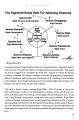
The Eightfold Noble Path for Attaining Dhamma
The Eightfold Noble Path For Attaining Dhamma
1. Samma Ditti - Right View and Understanding
2. Samma Sanggappa - Right Thought
3. Samma Waja - Right Speech
4. Samma Gammanda - Right Action
5. Samma A
The Eightfold Noble Path consists of eight practices that guide individuals towards the attainment of Dhamma. Each aspect emphasizes practical and mindful approaches to living, including Right View, R
60
Understanding the Mind and Defilements
Suzanne Jeffrey
the body will die. (4) It likes to travel fast and far. The speed of light is 186,000 miles a second, so it takes 8 minutes to see from the earth to the sun. But our mind perceives th
This text delves into the complexities of the human mind, emphasizing its speed and difficulty to control. It discusses how meditation can help in training the mind, which is often distracted by defil
61
Understanding Defilements and the Path to True Happiness
"• In conclusion, the sufferings of all beings are caused by succumbing to the influence of our accumulated defilements - from the past until this moment. We open our eyes (all of our senses are open)
In conclusion, suffering arises from our defilements, which influence our actions and desires. To achieve true happiness, we must eliminate these defilements through good actions, stopping poor habits
64
Transforming Habits: The Importance of Early Development
Suzanne Jeffrey
anything is wrong in the womb with the five elements, then our health will be affected.
All of our habits are affected by this early process and continue to affect us throughout
our l
The text highlights the essential nature of developing good habits from a young age to influence overall health and wellbeing. It discusses how the mother's habits during pregnancy can affect the chil
74
The Eightfold Path in Meditation
"Through meditation, we learn that we need to follow the eightfold path in order to meditate more profoundly and to continually improve. Every part of this path supports the other. For example, Right
Through meditation, following the Eightfold Path is essential for deeper practice and improvement. Each aspect of the path reinforces the others, aiding in cultivating better meditation. Adherence to
90
The Importance of Self-Reflection and Meditation
"The first is the structure of the physical body. The head dictates to us that we need to open our eyes. And when we open our eyes, we look outside. We never look inside. So when we look outside, we o
The passage highlights the significance of recognizing our own imperfections and the need to focus on self-reflection instead of constantly observing others. It suggests that we should learn to see th
112
Meetings with a Dharmar Master
Meetings with a Dharmar Master
[With this, he smiles because many of the people in the room are past 50. And they are groaning at the thought that they are passed the meditation stage.]
If we can er
In a meeting with a Dharmar Master, the conversation revolves around the path to enlightenment and overcoming defilements. The Master emphasizes that eradicating defilements is essential for reaching
117
Understanding Mara and Meditation
Suzanne Jeffery
Q: Does Mara exist? What does Mara look like?
A: Yes. Mara exists. Khun Yai used to say that Mara is Mara. Mara does not like good deeds and Mara always interferes. Mara cannot stop
In this content, Suzanne Jeffery discusses the existence of Mara, describing it as an entity that interferes with our ability to perform good deeds. Although Mara cannot prevent goodness, it can prese
118
The Future of Buddhism and Education in Thailand
Meeting #18
9AM - 19 March 2010
Today, Luang Por is somber. His whole demeanor has changed from one of the joviality he displayed yesterday to one of crucial significance. I am not sure why, but I th
In this significant meeting, Luang Por emphasizes the vital role of teachers in shaping the future of Buddhism and education in Thailand. He discusses the three meanings of Dhamma, highlighting the ne
119
Exploring the Unknown Factor and the Eightfold Noble Path
Suzanne Jeffrey
"The students you are teaching now will be the politicians when you retire. If you do not teach them properly, then who is to blame? We are!! We are to blame because we are probably n
The content emphasizes the responsibility of educators to guide students, as they will shape the future. It discusses various perceptions of the Unknown Factor, including Nibbana, God, and Supreme Kno
122
Understanding Wholesome and Unwholesome Actions
as animals, or born into bad places. There are various levels of these: (1) born as an animal (and that includes ANY animal), (2) born as a Hungry Ghost, (3) born as a monster, (4) Go to one of the va
In this text, the author discusses the consequences of actions in life, emphasizing the importance of wholesome practices such as sharing, charity, encouragement, and recognizing the results of both g
124
Meetings with a Dhamma Master
Meetings with a Dhamma Master
is a more coarse way to judge good and/or bad, we might not have the best way but at least people can live with one another. In addition to custom or tradition, we can a
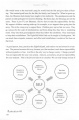
The text explores how good and bad actions are judged in Buddhism, emphasizing the importance of intention in determining Kamma. It reflects on the historical context of societal divisions due to misu
127
The Impact of Dhamma on Children's Mindfulness
Suzanne Jeffrey
fish would come to the road and Luang Pu would feed the fish and give them a blessing. That created good boon for the fish, the family, and Luang Por. When he grew up, then, the Dhamm
This text discusses how early Dhamma teachings and the support of family can influence a child's mindfulness and ethical behavior. It reflects on the challenges of modern society where distractions li
129
The Formation of Habits and Teaching Morality
Suzanne Jeffrey
which will lead to destructive thoughts and eventually into darkness. So, as we can see,
different habits lead to different lives. All of our habits come from our early training.
“Ho
This text discusses how habits develop from early training and repeated actions, and emphasizes that both good and bad habits influence our lives. It highlights the need for teachers to first correct